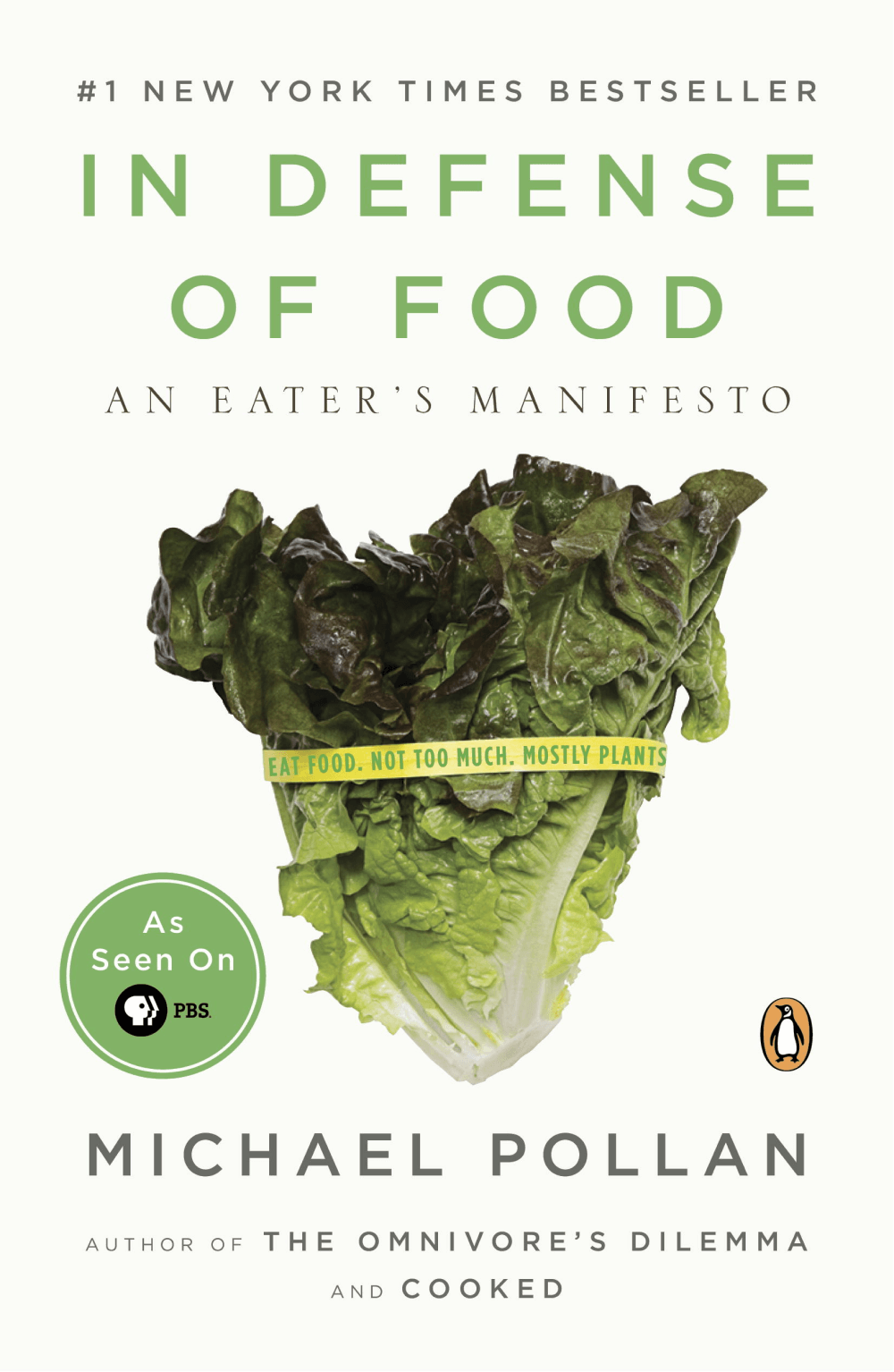
The title above is my own summary of Michael Pollan’s message. His words are “Eat food. Not too much. Mostly plants.” Pollan is the author of The Omnivore’s Dilemma and my current favorite In Defense of Food: An Eater’s Manifesto.
I’ll let you decide whether you want to read the book to see how he came to that conclusion (and it is well worth your time), but after 256 pages, that is his conclusion.
Eat Real Food.
Isn’t all food real? Well, maybe not.
Here is my bread ingredient list:
Flour, Water, Yeast, Salt.
Here is Pepperidge Farms bread ingredient list:
WHOLE WHEAT FLOUR, WATER, ENRICHED WHEAT FLOUR (FLOUR, NIACIN, REDUCED IRON, THIAMINE MONONITRATE, RIBOFLAVIN, FOLIC ACID), WHEAT GLUTEN, YEAST, SUGAR, OAT FIBER, CONTAINS 2% OR LESS OF: WHEAT BRAN, HONEY, MOLASSES, SALT, NONFAT MILK, MONOGLYCERIDES, CALCIUM PROPIONATE AND SORIBC ACID TO EXTEND FRESHNESS, WHEAT GERM, DATEM, BROWN SUGAR, MALTED BARLEY FLOUR, SUCRALOSE, SOY LECITHIN. CONTAINS: WHEAT, MILK, SOY.
Getting the nutrients you need from food should come from, you know, actual food. Look above and you’ll see thiamine mononitrate in the ingredient list (thiamine mononitrate is a synthetic form of Vitamin B1).
Now you can eat Pepperidge Farm bread and get your B1, along with all the other stuff (calcium propionate? Datem? Soy?) OR you could eat foods that provide B1:
– Asparagus – Pork, – Salmon
– Navy beans – Flax seeds – Green peas – Brown rice – Acorn squash – Firm tofu
Which do you think is better for your body and soul? Which will your body recognize as actual food? Which one will contain hundreds of naturally occurring vitamins, minerals, antioxidants, proteins, and fiber that humanity evolved to need?
Doesn’t it make sense to get your nutrients from actual whole food, not through industrially enriched mass foodstuffs? Doesn’t it make sense to buy food and brands that respect this?
Feed your body, feed your soul, and support the farmers and makers who provide it.