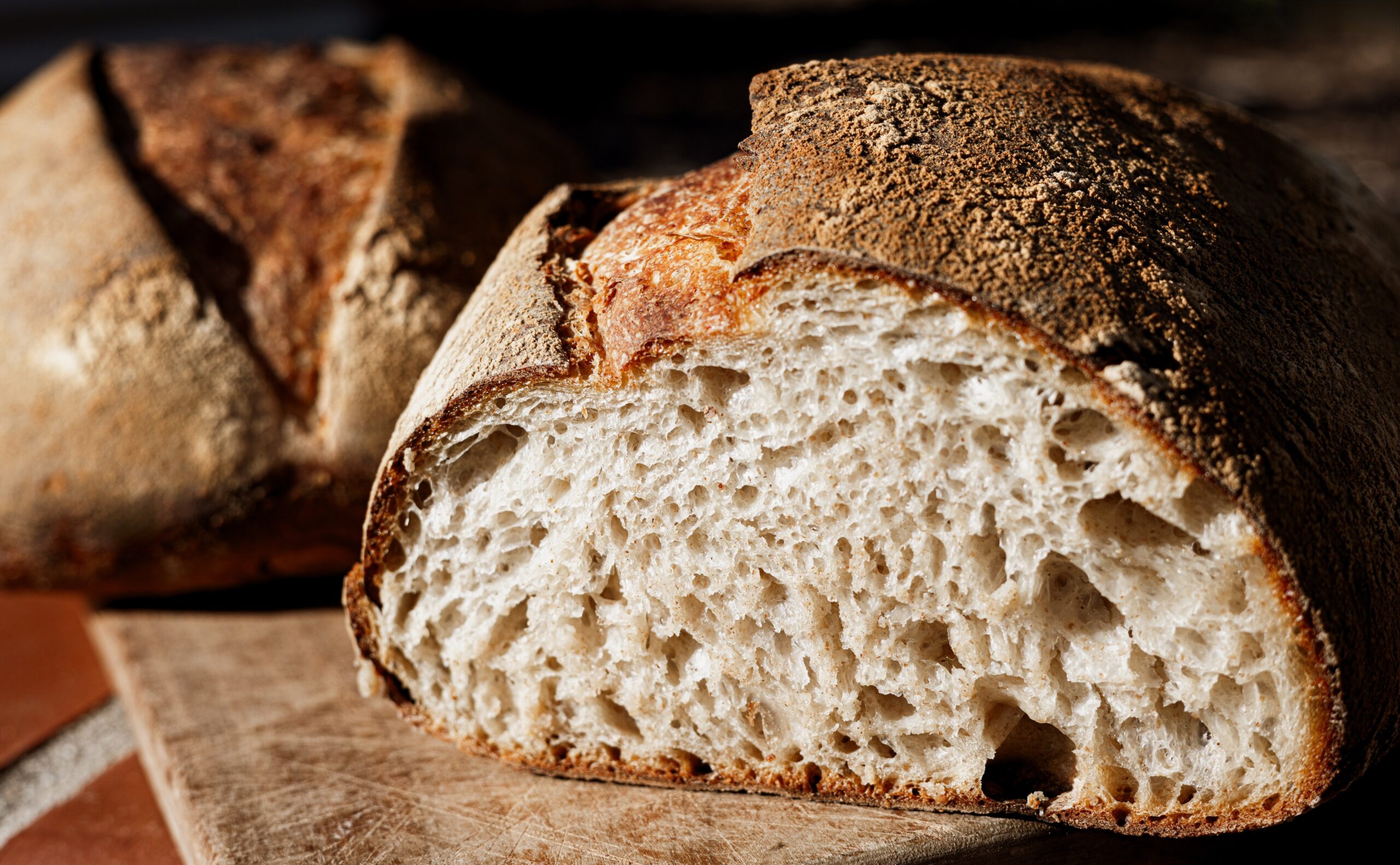
Human civilization was built on bread. Once we were hunters and gatherers. We hoped to have a successful hunt, and we hoped that the fruits, roots, grains and leaves we could gather would feed our family until the next day. And then the next day, and the next…
And then we noticed that we could encourage certain plants to grow, year after year, in one place. And those plants became the beginnings of agriculture. And we got really, really good at it.
Once we learned how to plant, grow, harvest, process grains, we were able to make bread in all its wondrous varieties. And life changed. The world changed.
Fast forward past that idyllic scene to the present, where most of our food comes wrapped in plastic, processed to within an inch of its life and then later “enriched” with whatever vitamins and minerals that we seem to think of as important beyond all other vitamins and minerals.
Some government regulatory intervention in our food supply isn’t all bad. Pasteurization saved millions from illness and death, enriching bread with thiamine prevented diseases such as beriberi, adding iodine to salt prevents goiters, adding Vitamin D to milk provides an important vitamin that many people don’t get enough of – especially at northern latitudes where the nights are long during winter.
Nowadays some see that bread as the enemy. Some modern breads, made with highly processed flour and artificially enriched with whatever vitamins and minerals the government demands are simply refined carbohydrates in loaf form. Often delicious, but seldom nutritious.
Bread made with highly refined flours spikes your blood sugar, demands an insulin response, and ultimately doesn’t bring anything nutritional to the table except for excess calories.
Bread isn’t the enemy, highly refined grains are.
For thousands of years, humanity lived on bread, thrived on bread, made bread a part of culture, created thousands of varieties of bread, and celebrated bread.
Were they wrong?
Our ancestors thrived on the bread they baked because they were using grains that were not GMO’d into uniformity, they were not bromated into uniformity, they were not ground using high pressure/high temperature mills into smooth uniformity, they were not separated from their hull to create… uniformity.
Uniformity is easier to market, easier to package, and cheaper for the producer. None of that benefits our health.
Grains are as unique as culture – there are hundreds out there – hard red, soft red, einkorn, barley, spelt, rye to name a few. And when treated as the miracle they are, allowed to be unique in flavor and texture, ground in a way that doesn’t destroy the nutritional content by blasting it with high heat, not chemically enriched or “preserved”, not have its components separated into “good” and “bad”, not languishing in a warehouse or store shelf, these grains feed us. They fed humanity for thousands of years, long before industrial conglomerates got into the food business.
At Nomad, we bring these grains to your table, full of the vitamins and minerals, protein, fiber and yes carbohydrates that is their birthright.